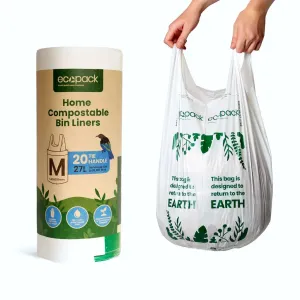
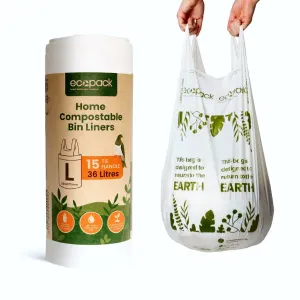
NZ$14.94
NZ$24.90
Reusable bin liner - brilliant and easy solution for your in-home and office bin.
EcoWarehouse stocks compostable bin liners, reusable bin liners, and recycling accessories for NZ households. Compostable bin liners are certified to break down in home compost and industrial compost facilities, replacing conventional plastic liners that persist in landfill.
Frequently asked questions
Yes, provided they are certified for your disposal method. Compostable liners certified to AS/NZS 4736 break down in industrial composting. Conventional plastic bin liners persist in landfill indefinitely. EcoWarehouse stocks liners with appropriate certifications, noted in each product listing.
It depends on your local council. Many NZ councils accept certified compostable liners in their green waste and food scraps bins. Check with your council directly, as acceptance varies by region and by the specific certification on the liner. Look for AS/NZS 4736 certification, which is the standard most NZ councils recognise.
Biodegradable means the material will eventually break down, but this can take hundreds of years and may leave microplastic fragments. Compostable means the material breaks down within a defined timeframe (typically 90 to 180 days) in a composting environment, leaving no toxic residue. Compostable is the more meaningful and regulated term. Look for the seedling logo or AS/NZS 4736 certification.
NZ recycling rules vary by council, but the general principle is: glass, plastics 1 and 2, cardboard, and paper in the recycling bin; food scraps and garden waste in the green or food scraps bin (where available); everything else in the general waste bin. Compostable bin liners are accepted in food scraps bins by many councils. Check your specific council's website for local rules.
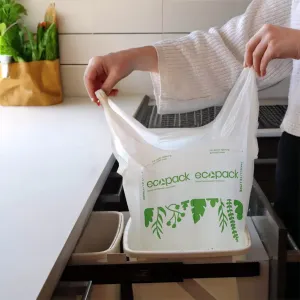
Yes for the inner bins you empty frequently. A reusable bin liner sits inside a small kitchen bin and is emptied directly into the main bin or compost, then wiped clean. This eliminates the single-use plastic liner entirely for frequently emptied bins. For the main rubbish bin, a compostable liner is the better option.
The priority order is: reduce the waste you generate, reuse containers and packaging, compost food scraps (bokashi handles all food waste including meat and dairy), recycle what remains, and landfill only what cannot be dealt with any other way. Switching to products with minimal packaging, buying in bulk, and using a compost or bokashi system are the three changes that make the biggest difference.
*Note: Free shipping applies to all first-time orders within New Zealand.
For bulky items or rural delivery, there will be a small surcharge to help us cover the higher courier fees.
It is our responsibility to protect your privacy and we guarantee that your data will be completely confidential.
Please sign in first.
Sign in
Create a free account to use wishlists.
Sign inPlease sign in first.
Sign in