
NZ$14.90
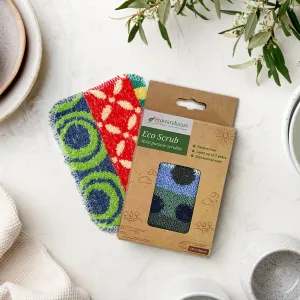
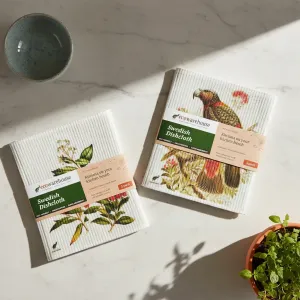
Eco-friendly biodegradable dish cloths that clean effectively and break down naturally, reducing waste in your kitchen.
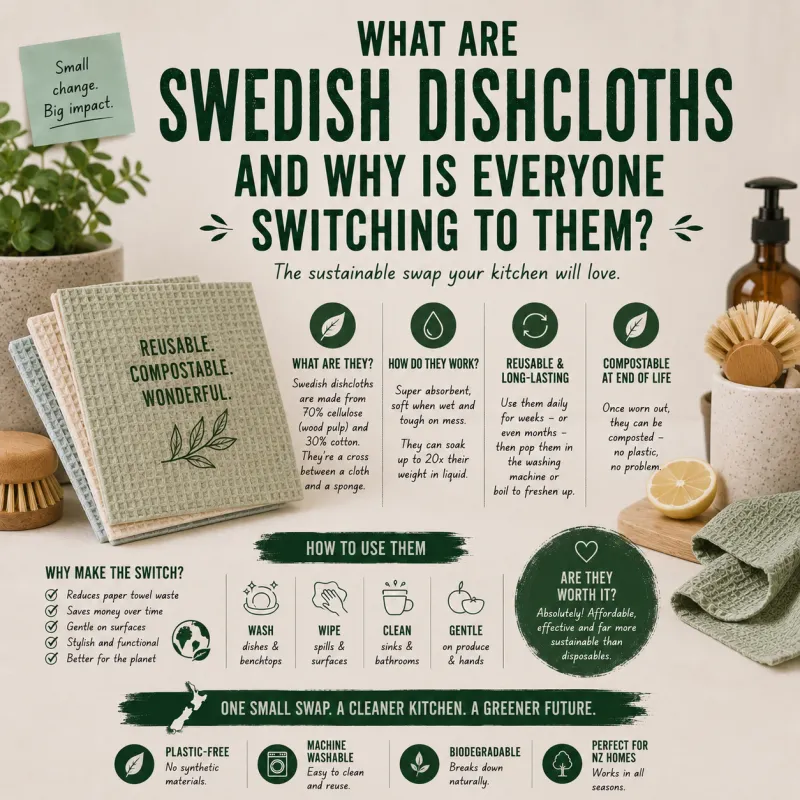
If you've spent any time looking at sustainable kitchen products, you've probably come across Swedish dishcloths. They seem to be everywhere right now, and the claims around them are striking: one cloth replacing 17 rolls of paper towels, reusable, washable, compostable. It sounds like marketing hyperbole, but the claims are actually backed up by the product.
Here's a straightforward explanation of what Swedish dishcloths are, how they work, and whether they're worth swapping to.
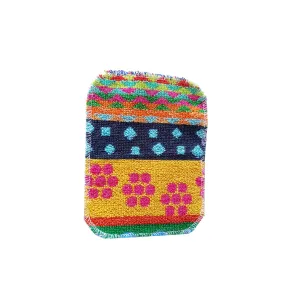
A Swedish dishcloth is a thin, lightweight cloth made from a blend of cellulose (plant-based) and cotton fibres. The material is quite unique. When dry it feels firm, almost like a thick piece of card. When wet it behaves like a sponge, absorbing many times its own weight in liquid. When you wring it out and let it dry, it dries quickly and returns to its firmer state.
The product originated in Sweden in the 1940s, developed as a practical kitchen cloth for a country with a strong tradition of functional, waste-reducing design. The format has barely changed since then because it doesn't need to.
Paper towels are convenient but they're single-use, they come in plastic packaging, and the production process is resource-intensive. A Swedish dishcloth does everything a paper towel does (wipe surfaces, dry dishes, handle spills) and continues doing it for months. The often-quoted figure is that one cloth replaces around 17 rolls of paper towels over its lifespan. That estimate varies depending on how heavily it's used, but even if it's half that, it's a significant reduction.
The cloth is also more effective than paper towels for most tasks, because it doesn't tear or fall apart when wet and absorbs much more liquid.
This is the key question that makes or breaks any reusable product. Swedish dishcloths are easy to clean. You can run them through the dishwasher, throw them in the washing machine, or rinse them under the tap for quick refreshes. The cellulose material dries quickly, which limits bacterial growth between uses. Most people get 6 to 12 months of regular use out of one cloth before it needs replacing.
When the cloth eventually reaches end of life, it goes in the compost bin. The cellulose and cotton fibres break down completely.
Almost everything you'd currently use paper towels or a disposable kitchen wipe for. Wiping benches, wiping up spills, drying dishes, cleaning the stovetop, wiping down the outside of appliances. They handle all of it. They're also good as a dishcloth replacement, though some people prefer a wooden dish brush for the washing-up and the dishcloth as a wiping-up tool.
What they won't do is handle really heavy-duty scrubbing tasks. For baked-on residue in pans, you'll want a natural fibre scrubber like the Eco Scrub Euroscrubby alongside the cloth.
Straightforwardly, yes. The cost per cloth is low, they last a long time, and they eliminate a continuous stream of paper towel waste. Once you've used one for a couple of weeks, going back to paper towels feels wasteful.
EcoWarehouse stocks Swedish dishcloths alongside wooden dish brushes and natural fibre scrubbers for a complete plastic-free kitchen cleaning setup.
*Note: Free shipping applies to all first-time orders within New Zealand.
For bulky items or rural delivery, there will be a small surcharge to help us cover the higher courier fees.
It is our responsibility to protect your privacy and we guarantee that your data will be completely confidential.
Please sign in first.
Sign in
Create a free account to use wishlists.
Sign inPlease sign in first.
Sign in