
NZ$14.90
NZ$15.50
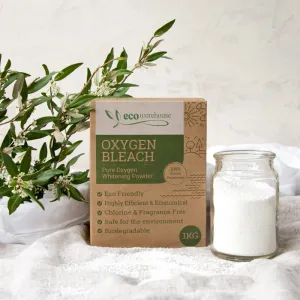
Oxygen Bleach is a highly effective chlorine and fragrance free pure oxygen whitening powder. 100% Sodium Percarbonate.
Most households in New Zealand keep a bottle of bleach under the sink for tough cleaning jobs. It's been a standard item for decades, and it works. The question worth asking is whether it's the best option, or just the default one.
Oxygen bleach has been available for years but is still less well known than chlorine bleach. For most household uses, it's a better choice in almost every way. Here's why.
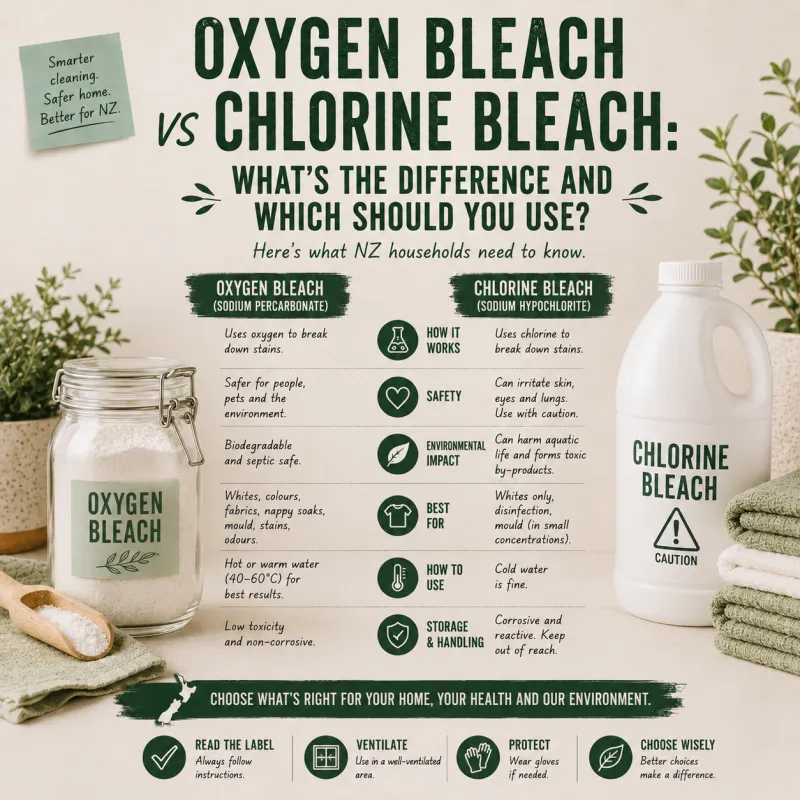
Chlorine bleach (sodium hypochlorite) works by releasing chlorine gas when it contacts surfaces or stains. Chlorine is a powerful oxidiser that destroys colour molecules and kills microorganisms. It's fast and effective, but the same properties that make it powerful also make it aggressive and potentially harmful.
Oxygen bleach (sodium percarbonate) releases hydrogen peroxide and soda ash when it dissolves in water. Hydrogen peroxide is also an oxidiser and does a similar job to chlorine bleach, but more gently. It whitens, removes stains, and kills most household pathogens, but at a much lower risk to surfaces, fabrics, or the people using it.
Chlorine bleach is hard on fabrics. It weakens fibres over time, and it can only be used on white cotton items. It will destroy colour and damage synthetic fibres. Most households can't use it on the majority of their laundry.
Oxygen bleach is safe to use on colours and on most fabric types. It won't strip colour, won't weaken fibres the way chlorine does, and can be added to a standard wash alongside your regular detergent or soapnut shells. It's particularly good at removing organic stains like tea, coffee, grass, and food.
For whites, oxygen bleach whitens gently and safely. It won't produce the harsh, over-bleached look that chlorine bleach can leave on natural fabrics.
Chlorine bleach is effective at disinfecting hard surfaces, but it leaves a residue, produces fumes that aren't pleasant or safe to breathe in poorly ventilated spaces, and reacts with some other cleaning products (including common acids like vinegar) to produce harmful gases. It also damages grout, metal, and painted surfaces over repeated use.
Oxygen bleach is safer to handle, produces no significant fumes, and is gentler on surfaces. A solution of oxygen bleach in warm water can clean tiles, grout, chopping boards, and kitchen surfaces effectively. It rinses away cleanly and doesn't leave a residue.
Chlorine bleach produces organochlorine compounds as it breaks down in wastewater systems. These compounds are persistent in the environment and have been associated with negative effects on aquatic life.
Sodium percarbonate breaks down in water into hydrogen peroxide, which breaks down into water and oxygen, and soda ash (sodium carbonate), which is a common mineral. No persistent compounds, no chlorine load on the wastewater system.
There are specific situations where chlorine bleach remains the stronger option, particularly in healthcare settings requiring rapid, broad-spectrum disinfection. For general household use, however, oxygen bleach covers the territory.
EcoWarehouse stocks oxygen bleach powder in a fragrance-free, chlorine-free 1kg bag. The powder format means no plastic bottle waste per use, and one bag covers many washes and cleaning sessions.
*Note: Free shipping applies to all first-time orders within New Zealand.
For bulky items or rural delivery, there will be a small surcharge to help us cover the higher courier fees.
It is our responsibility to protect your privacy and we guarantee that your data will be completely confidential.
Please sign in first.
Sign in
Create a free account to use wishlists.
Sign inPlease sign in first.
Sign in