

NZ$4.30
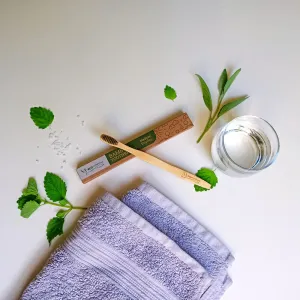
Eco-friendly bamboo toothbrush with medium charcoal infused bristles for a gentle, effective clean and a sustainable smile.
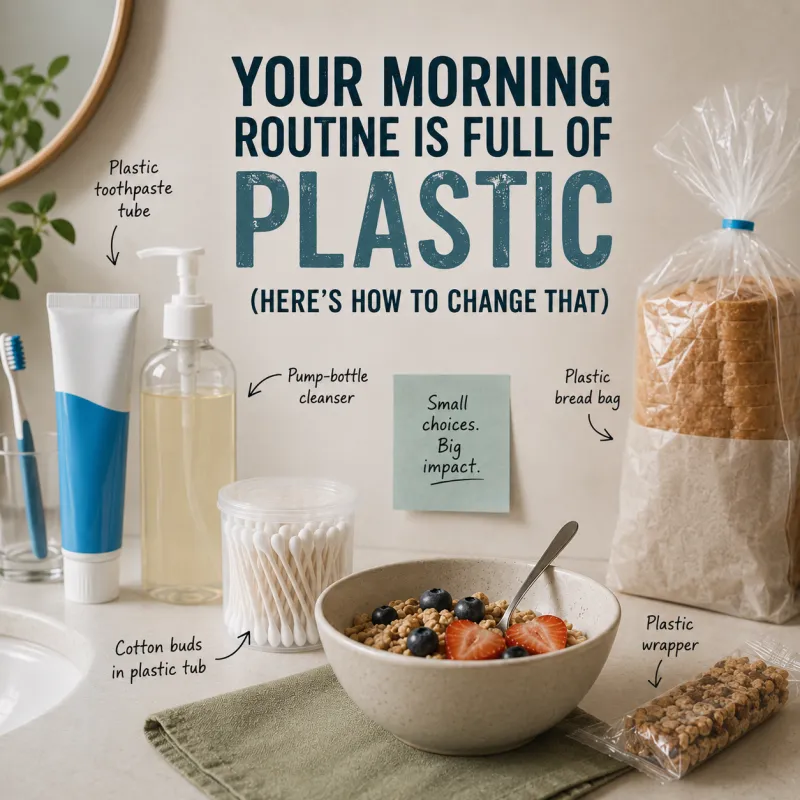
Think about your morning. Alarm goes off. You stumble to the bathroom, squeeze toothpaste from a plastic tube, wash your face with a pump-bottle cleanser, grab cotton buds from a plastic tub, maybe chuck a plastic pod in the coffee machine. By the time you've had breakfast, you've touched a dozen single-use plastic items and the day has barely started.
The good news is that none of those items are actually necessary in plastic form. Every single one has a well-tested, plastic-free alternative. And most of them cost about the same or less over time.
The easiest first swap is your toothbrush. A bamboo toothbrush works exactly like the plastic version, handles the same way, and cleans just as well. The difference is the handle breaks down at end of life instead of sitting in landfill for 500 years. Pair it with toothpaste dental tablets, which come in a small glass jar or compostable packaging, and you've eliminated two plastic items before you've even left the bathroom.
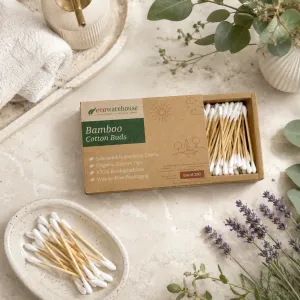
Cotton buds are another quick win. Bamboo cotton buds do the same job as conventional ones and the stalks are compostable. If you get through a box a month, switching to bamboo means diverting around 200 plastic stems from landfill every single month. Small number, real difference.
Once you start looking, the bathroom is basically a plastic warehouse. Shampoo bottles, conditioner bottles, body wash, face wash, shaving cream cans. Each one gets used up and thrown away. Swapping to shampoo bars and solid soap bars eliminates most of that waste in one move. Many people are nervous about making this swap, but bar shampoos have come a long way. A good one lathers well, conditions properly, and lasts longer than a bottle because you use only what you need.
A wooden brush or loofah handles exfoliating duty without any microplastic-shedding nylon.
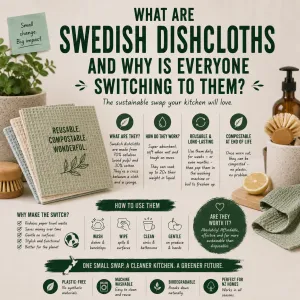
Most kitchens run on single-use plastics too. Cling wrap, disposable sponges, paper towels, plastic bags. Swedish dishcloths handle the paper towel and sponge role beautifully. They absorb far more than paper towels, rinse clean, and last months instead of days. Beeswax wraps cover bowls and wrap sandwiches just like cling film, without any plastic. For produce at the supermarket, organic cotton mesh produce bags mean you never need to grab those little plastic bags from the roll again.
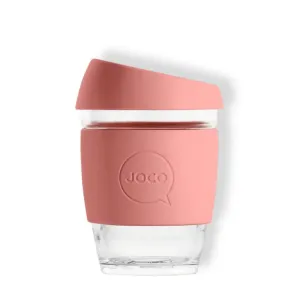
If you use a coffee machine with capsules, the waste adds up fast. Loose-leaf tea and coffee made in a plunger or stovetop moka pot produces nothing but grounds, which go straight into the compost. If you prefer tea, a stainless steel infuser and loose-leaf tea costs less per cup than teabags and generates zero waste. A reusable glass coffee cup means your takeaway doesn't come in a disposable either.
The most sustainable swap is always the one you actually keep using. Start with two or three changes, not twelve at once. Once those feel completely normal, add more. Most people find that after a few weeks the plastic-free versions feel so natural that going back seems strange.
Browse EcoWarehouse's full range of bathroom essentials and kitchen swaps at ecowarehouse.nz.
*Note: Free shipping applies to all first-time orders within New Zealand.
For bulky items or rural delivery, there will be a small surcharge to help us cover the higher courier fees.
It is our responsibility to protect your privacy and we guarantee that your data will be completely confidential.
Please sign in first.
Sign in
Create a free account to use wishlists.
Sign inPlease sign in first.
Sign in